
Search
Titles and Description of Dhamma Talks

Ajahn Viradhammo begins. It's about trusting in awareness.. Trust on the outer level and inner level..so yes, awareness on the outer level, he mentions an example of checking the delivery of the measure of the cords of fire wood being brought to the monastery as an outer level, a worldly dhamma. And the importance of establishing a good foundation for the contemplative life is cultivating a good lifestyle and then having that in place we are talking about stream of consciousness....this is where the ideas of dependant origination, anicca, dukkha come from ....in that sense where stream of consciousness fit in with trust.. so there is a sense of peace, of happiness? .....
Ajahn Viradhammo points to the bringing in of more silence into the mind rather than trying to control thoughts. He points to another dimension of the mind that he is interested in...the unchanging, the timeless, nibbana...turning towards just this moment in a very simple way...stillness of being...non-desire
So training in non preconception...availability.......
Ajahn Viradhammo encourages sleepy retreatants to choose to opt out of the sitting and have a cold shower, or do walking practice or to take a nap if their fatigue is too much. Fore the others he begins by asking them to listen to sound and feel the body. . .notice silence . . . awareness is unchanging . . . the foreground changes . . the background is silent.. conscious.. awareness. . .be the background.. . . .
Ajahn Viradhammo speaks about his early spiritual search, this search has a loneliness that we have no language for. He continues with sharing his experience of entering into the spiritual life.
Ajahn Viradhammo receives a request to give or lead the retreatants in ‘taking on’ the eight precepts for the length of the retreat.
After 7 minutes approximately he offers reflections on this path as a contemplative, a monk in the Thai Forest Sangha tradition of Ajahn Chah. It is from this perspective that ‘Luang Por Viradhammo speaks of his understanding of ‘homage’ to the Buddha and knowing the possibility of awakening in this life. This path brings optimism to his life as has living within the vinaya (the precepts taken on by the monks in a Buddhist Sangha) . . . . .

Ayya Nimmala answers questions and encourages abiding in awareness and to use the qualities of wise reflection. Analysis can lead to paralysis.
https://www.accesstoinsight.org/ptf/dhamma/sila/index.html#benefits

Bhante Jinananda speaks about becoming a monk at 12 years old in Sri Lanka. This is a very traditional practice in a Buddhist culture and also after visiting the temple and paying respects the family will usually make a wish for good fortune.
Bhante J points out good fortune, nirvana is not possible through wishing.
Rather he explains the benefits of practicing morality, the five precepts that the Buddha taught brings benefits...
Virtue sila © 2005
https://www.accesstoinsight.org/ptf/dhamma/sila/index.html#benefits

Ajahn Achalo leads a guided breath meditation then starts his dhamma talk with one paragraph from the Anapansati Sutta, the Buddha's teaching on mindfulness of breath..."Mindfulness of in-&-out breathing, when developed & pursued, is of great fruit, of great benefit. Mindfulness of in-&-out breathing, when developed & pursued, brings the four frames of reference to their culmination. The four frames of reference, when developed & pursued, bring the seven factors for awakening to their culmination. The seven factors for awakening, when developed & pursued, bring clear knowing & release to their culmination." Ajahn restates freedom liberation, the whole of the Path can be realized through mindfulness of the breath" ...
https://www.accesstoinsight.org/tipitaka/mn/mn.118.than.html

Bhante Rahula speaks to this foundational teaching of the Buddha Paticca Samuppada Dependent Origination. - cause and effect.
Ajahn Viradhammo, speaking for the first time after the three month winter retreat, reflects on the realm of thought and its limitations. There was a tragic loss of lives in the Buddhist community in Ottawa. The feeling in the funeral home was heartbreaking, it was not thinking.
Tension, worry are not resolved with thinking. Try practicing a face meditation where one listens and waits abiding in and awakening to the way things are. The tension, worry opens with the attention of the heart. The tension in the face becomes known and resolved through this deeper feeling - the awareness and compassion available with the heart. The body comes alive, not through thought. This was very liberating, it can bring joy (mudita) to trust in awareness, a path with heart.

Ajahn Geof asks us to see "where does my mind create suffering?" Prior to this he speaks about knowing what is skillful ?"
"So focus on the practice as a way of collecting tools, developing skills, both in terms of techniques in the meditation and whole attitudes toward your life. That’s the most worthwhile use of your time. Those are the best things to take with you when you go.
Skills to Take with You, Thanissaro Bhikkhu
With Each and Every Breath
https://www.dhammatalks.org/books/WithEachAndEveryBreath/Section0001.html

Tan Sirimedho talks about how the Buddha, a great religious leader, would teach first about generosity. Tan Sirimedho asks - why is generosity praised and accepted universally by so many religions? and another question: have you ever given anything and never felt bad about it?
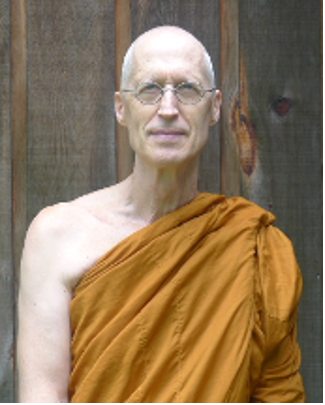
Ajahn Pavaro reflects on the expression in the Metta Sutta..." unburdened with duties". He asks how do we regard our duties? How could we simplify and reframe them ?
He references Ajahn Viradhammo's use of the foreground and the background and how the practice of mindfulness helps us to know the background. If we attach to the sensation that arises - we are then in the foreground. By attending to what is happening a wholesome, causal relationship begins to develop (bhavana) awareness of the nuanced movement between the foreground and the background.
Ajahn directs us to the body as a frame of reference and recommends Frames of Mindfulness by Ajaan Lee Dhammadharo, translated by Thanissaro Bhikkhu. https://www.accesstoinsight.org/lib/thai/lee/frames.html

Ajahn Sucitto opens this New Year's Eve retreat in Montreal by establishing the ground for meditation away from the context of our distracted complex society.

Jim Bedard leads a 20 minute sit followed by questions on his Zen name, Varindo. He shares a reflection on what it means: worthy of respect. Jim encourages gratitude and respect for the work in a meditation practice. Lastly he answers how he began in this teaching.
Ajahn Sucitto on retreat answers questions and speaks about the experience on the path as being a zig and then a zag.

Bhante Gunaratana speaks about the purpose of meditation is to purify the mind - everything is mind made.
Ajahn Pavaro speaks of his first encounter hearing and recognizing the value of the Dhamma in the teaching of Anagarika Dhammadinna. He expresses his gratitude for this Austrian born yet thought to be the first Canadian Buddhist nun. He goes on to teach that knowing it is beautiful we establish and recall parts of practice that are important, we lean into the practice breath new life into it with persistence, creativity and humility .. answers are not stable. We need a willingness to ask the questions again and again.

Ajahn Cunda speaks to the challenge in keeping to attitudes. We want to do something about dissatisfaction, or an obstruction, we want it to be differently. Ajahn Cunda mentions how remembering LP Liem and Ajahn Chah's examples is helpful to him. He mentions the irony of Buddhism is there no other possible place to be happy but now, the future is unknown. Yet we have the potential ( through training) to realize, recognize and understand there is just this moment, this experience. There is no other place to be happy but now.
Bhante Rahula answers meditation questions about Right View by encouraging first the development of mindfulness of the body, mindfulness of feelings, and mindfulness of mind. With increased concentration using mindfulness then mindfulness of Dhamma and Right View and Dhamma Vipassana can be understood. He speaks to about restlessness, how his day is structured and ends leading a guided meditation.
Featured Talks
Dhamma Talks by Buddhist Teachers
Ajahn Achalo
Ajahn Achalo leads a guided breath meditation then starts his dhamma talk with one paragraph from the Anapansati Sutta, the Buddha's teaching on mindfulness of breath..."Mindfulness of in-&-out breathing, when developed & pursued, is of great fruit, of great benefit. Mindfulness of in-&-out breathing, when developed & pursued, brings the four frames of reference to their culmination. The four frames of reference, when developed & pursued, bring the seven factors for awakening to their culmination. The seven factors for awakening, when developed & pursued, bring clear knowing & release to their culmination." Ajahn restates freedom liberation, the whole of the Path can be realized through mindfulness of the breath" ...
https://www.accesstoinsight.org/tipitaka/mn/mn.118.than.html

Venerable Amarasiri
Tan Amarasiri remembers when Ajahn Sumedho visited Tisarana two years earlier and he was sitting at the feet of Ajahn Sumedho watching the sunset and the silence in their presence is perceptible.
Does silence need to be complicated? Is it not a matter of being receptive, of waiting..?
He then talks about a depth of understanding possible in the Mangala Sutta. What is auspicious, that touches the heart? I am going to watch what's happening.
He references the last Stanza of the 38 Blessings of the Mangala Sutta, and asks is there something that is without sorrow, without stain that is safe an secure unshakeable ..is there something that remains steady if we can touch that - be with the silence, be in the background..then none of these things shake us. He asks..where does the joy spring from?
Life's Highest Blessings
The Maha Mangala Sutta translation and Commentary by Dr. R.L. Soni
https://www.accesstoinsight.org/lib/authors/soni/wheel254.html#ch4-1
Tan Amarasiri speaks about reflection and transition from the monks recent three month retreat. He found a note in a book that said "what is not the practice?" he reflects on his experience of unwholesome layers falling away and draws upon Ajahn Jayasaro's analogy of the story of questioning Michelangelo's process of sculpting a prancing horse: the parts that are not the prancing horse, fall away.
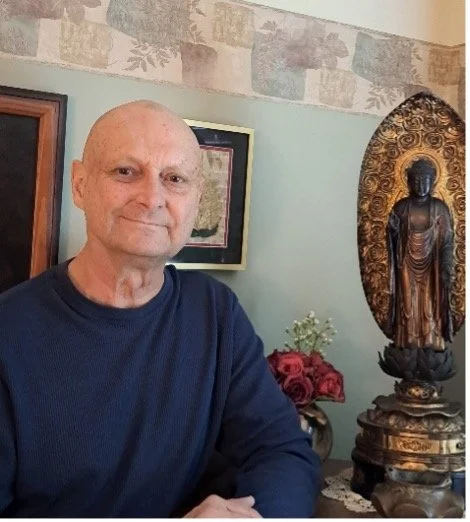
Jim Bedard
Jim explains how his first teacher Roshi Kapleau would teach how to listen to a dhamma talk - a sense of listening with the whole body. He continues and asks "What is it that hears sound?".
Jim Bedard leads a 20 minute sit followed by questions on his Zen name, Varindo. He shares a reflection on what it means: worthy of respect. Jim encourages gratitude and respect for the work in a meditation practice. Lastly he answers how he began in this teaching.

Catherine Collobert

Professor Collobert quotes the Saṁyutta Nikāya
Connected Discourses on the Unconditioned
SN 43.14–43. The Taintless https://suttacentral.net/sn43.14-43
She explains that in the Pali Canon the Buddha referred to the goal of the Path is Nibbana. It is like the extinguishing of a fire, the freedom from suffering. The Buddha's choice of metaphors for Nibbana still intrigues us and Professor Collobert goes on to explain, from her experience, the skills and patience required to follow the Buddha's Path.
" I can let go of craving by not grasping at it, but by observing it."
Professor Collobert begins with noting the complexity of our conditioning and how the many meditation subjects taught by the Buddha - when practiced with commitment - will reshape our mind. This practice leads to understanding how our experience is based on the illusion of self....
Ajahn Cunda
Ajahn Cunda starts his dhamma talk by quoting Ram Dass .." If you ever think you're enlightened you should go live with your parents and see how that works outs". Ajahn Cunda then goes on to explain he attended his nieces wedding and how this challenged him to develop non violent communication skills. Compassion can mean setting boundaries.
Ajahn Cunda speaks to the challenge in keeping to attitudes. We want to do something about dissatisfaction, or an obstruction, we want it to be differently. Ajahn Cunda mentions how remembering LP Liem and Ajahn Chah's examples is helpful to him. He mentions the irony of Buddhism is there no other possible place to be happy but now, the future is unknown. Yet we have the potential ( through training) to realize, recognize and understand there is just this moment, this experience. There is no other place to be happy but now.
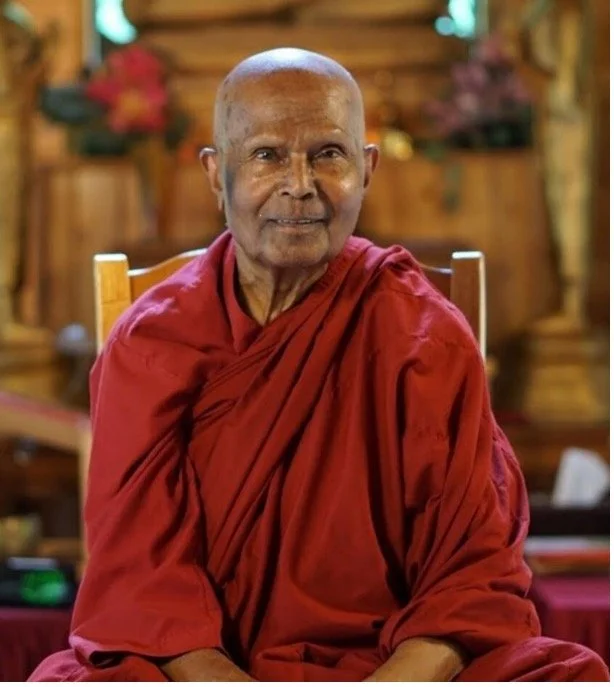
Bhante Gunaratana
Bhante Gunaratana speaks about the purpose of meditation is to purify the mind - everything is mind made.
Ayya Nimmala
Ayya Nimmala answers questions and encourages abiding in awareness and to use the qualities of wise reflection. Analysis can lead to paralysis.
https://www.accesstoinsight.org/ptf/dhamma/sila/index.html#benefits

Ayya Nimmala asks us to reflect on impermanence - is there anything that you can think of that is permanent? Investigate for yourself.
The Buddha asked how do you reflect wisely? Ayya Nimmala reminds us of the conditioning we have all been raised with and that they impacted us.
Training involves reflecting wisely on whatever is coming in through the senses, what we're thinking, reacting.. see it as impermanent and letting go.
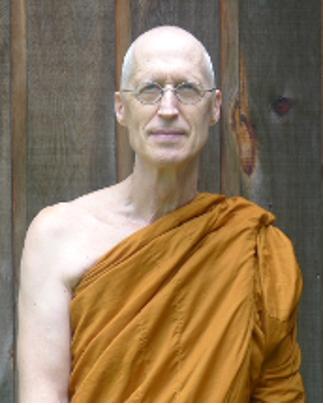
Ajahn Pavaro

Ajahn Pavaro lists and explains the practice of the 10 Punna Kiriyavatthu or 10 Foundations of Meritorious Action. These practices help strengthen continuity of mindfulness.
en.wikipedia.org/wiki/Merit_(Buddhism)
Ajahn Pavaro reads from Stillness Flowing, The Life and Teachings of Ajahn Chah. He offers his reflections and answers questions.
https://www.accesstoinsight.org/ptf/dhamma/sila/index.html#benefits
Ajahn Pavaro teaches .." we use natural sights and sounds as part of our practice because its interesting - things just being what they are - can remind the mind of what it is."
Ajahn Pavaro reflects on the expression in the Metta Sutta..." unburdened with duties". He asks how do we regard our duties? How could we simplify and reframe them ?
He references Ajahn Viradhammo's use of the foreground and the background and how the practice of mindfulness helps us to know the background. If we attach to the sensation that arises - we are then in the foreground. By attending to what is happening a wholesome, causal relationship begins to develop (bhavana) awareness of the nuanced movement between the foreground and the background.
Ajahn directs us to the body as a frame of reference and recommends Frames of Mindfulness by Ajaan Lee Dhammadharo, translated by Thanissaro Bhikkhu. https://www.accesstoinsight.org/lib/thai/lee/frames.html
Ajahn Pavaro speaks of his first encounter hearing and recognizing the value of the Dhamma in the teaching of Anagarika Dhammadinna. He expresses his gratitude for this Austrian born yet thought to be the first Canadian Buddhist nun. He goes on to teach that knowing it is beautiful we establish and recall parts of practice that are important, we lean into the practice breath new life into it with persistence, creativity and humility .. answers are not stable. We need a willingness to ask the questions again and again.
Bhante Rahula
Bhante Rahula answers meditation questions about Right View by encouraging first the development of mindfulness of the body, mindfulness of feelings, and mindfulness of mind. With increased concentration using mindfulness then mindfulness of Dhamma and Right View and Dhamma Vipassana can be understood. He speaks to about restlessness, how his day is structured and ends leading a guided meditation.
Bhante Rahula speaks about sankharas or mental imprints, which are all part of conditioned phenomena that we begin to perceive through meditation practice.
He says.." we need to fish them out of the sea of samsara"
Bhante Rahula speaks to this foundational teaching of the Buddha Paticca Samuppada Dependent Origination. - cause and effect.
Bhante Rahula answers meditation questions about Right View by encouraging first the development of mindfulness of the body, mindfulness of feelings, and mindfulness of mind. With increased concentration using mindfulness then mindfulness of Dhamma and Right View and Dhamma Vipassana can be understood. He speaks to about restlessness, how his day is structured and ends leading a guided meditation.

Venerable Sirimedho
Tan Sirimedho reflects on the Buddha's teachings on three areas - attending (thinking) to a task or something; giving up
(sensations, habits, hindrances) and abiding (developing) in the attainment say faith. Tan Sirimedho thinks of it as stages of development.
Tan Sirimedho talks about how the Buddha, a great religious leader, would teach first about generosity. Tan Sirimedho asks - why is generosity praised and accepted universally by so many religions? and another question: have you ever given anything and never felt bad about it?
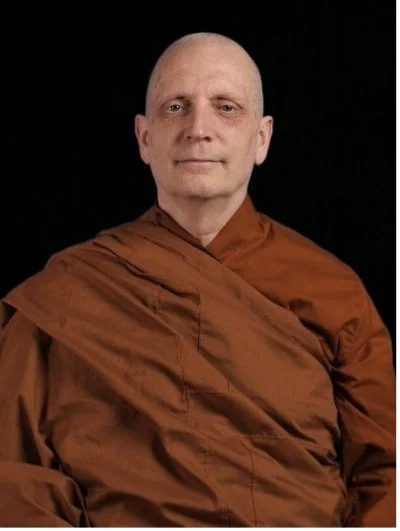
Ajahn Sona
Ajahn Sona induces a sense of joy into the meditation period and then follows with a dhamma talk that draws the similarities between the time of the 5th Century BC and now 2022.

Ajahn Sona speaks about undoing and retraining attitudes we casually pick up that can be chaotic and harmful. We may not be able to undo physical ailments but we can undo and get relief from emotional ailments.
Ajahn Sona leads a meditation on self care established in relaxation, friendliness and then he chants inviting the devas and then talks about the Buddha's strategy for establishing unshakeable equanimity.

Ajahn Sucitto
Ajahn Sucitto leads the retreat participants in experiencing the fluidity, the energy of "disentanglement' - and seeing directly ..its like this.
Change can be understood...
Ajahn Sucitto encourages getting at the mind and into the body at this New Years Eve retreat in Montreal. Something can be done in applying the appropriate energy to specific points.
Ajahn Sucitto opens this New Year's Eve retreat in Montreal by establishing the ground for meditation away from the context of our distracted complex society.
Ajahn Sucitto speaking at this residential retreat in Montreal on New Years Eve names sati as that ah ha moment - that causes you to remember.
Ajahn Sucitto on retreat answers questions and speaks about the experience on the path as being a zig and then a zag.
Thanissaro Bhikkhu
Ajahn Geof asks us to see "where does my mind create suffering?" Prior to this he speaks about knowing what is skillful ?"
"So focus on the practice as a way of collecting tools, developing skills, both in terms of techniques in the meditation and whole attitudes toward your life. That’s the most worthwhile use of your time. Those are the best things to take with you when you go.
Skills to Take with You, Thanissaro Bhikkhu
With Each and Every Breath
https://www.dhammatalks.org/books/WithEachAndEveryBreath/Section0001.html
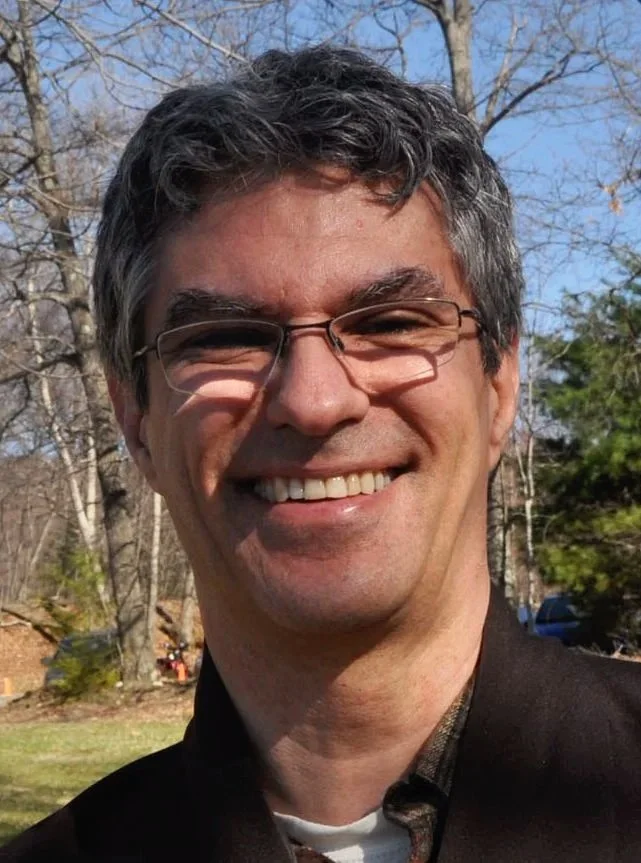
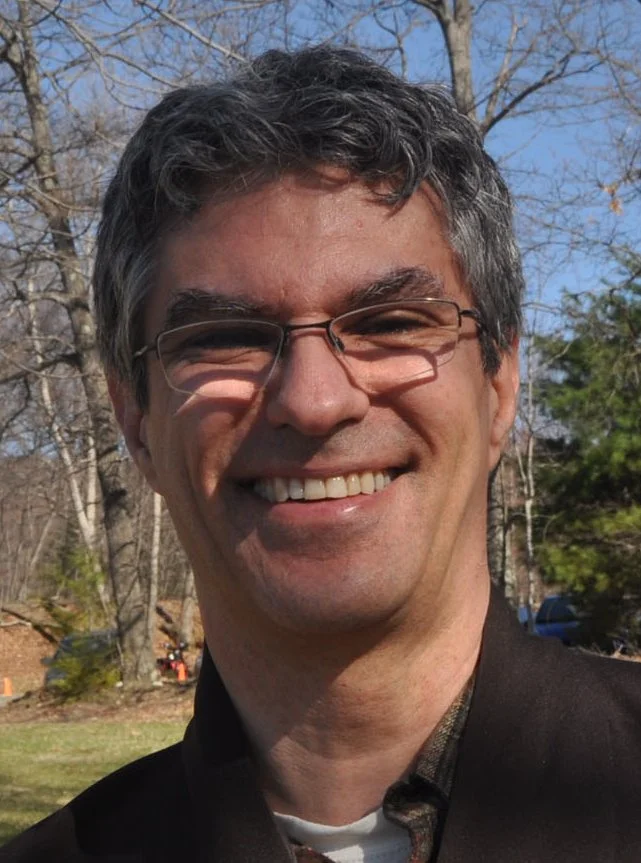

Ajahn Viradhammo
Ajahn Viradhammo begins. It's about trusting in awareness.. Trust on the outer level and inner level..so yes, awareness on the outer level, he mentions an example of checking the delivery of the measure of the cords of fire wood being brought to the monastery as an outer level, a worldly dhamma. And the importance of establishing a good foundation for the contemplative life is cultivating a good lifestyle and then having that in place we are talking about stream of consciousness....this is where the ideas of dependant origination, anicca, dukkha come from ....in that sense where stream of consciousness fit in with trust.. so there is a sense of peace, of happiness? .....
Ajahn Viradhammo points to the bringing in of more silence into the mind rather than trying to control thoughts. He points to another dimension of the mind that he is interested in...the unchanging, the timeless, nibbana...turning towards just this moment in a very simple way...stillness of being...non-desire
So training in non preconception...availability.......
Ajahn Viradhammo encourages sleepy retreatants to choose to opt out of the sitting and have a cold shower, or do walking practice or to take a nap if their fatigue is too much. Fore the others he begins by asking them to listen to sound and feel the body. . .notice silence . . . awareness is unchanging . . . the foreground changes . . the background is silent.. conscious.. awareness. . .be the background.. . . .
Ajahn Viradhammo speaks about his early spiritual search, this search has a loneliness that we have no language for. He continues with sharing his experience of entering into the spiritual life.
Ajahn Viradhammo receives a request to give or lead the retreatants in ‘taking on’ the eight precepts for the length of the retreat.
After 7 minutes approximately he offers reflections on this path as a contemplative, a monk in the Thai Forest Sangha tradition of Ajahn Chah. It is from this perspective that ‘Luang Por Viradhammo speaks of his understanding of ‘homage’ to the Buddha and knowing the possibility of awakening in this life. This path brings optimism to his life as has living within the vinaya (the precepts taken on by the monks in a Buddhist Sangha) . . . . .
Ajahn Viradhammo, speaking for the first time after the three month winter retreat, reflects on the realm of thought and its limitations. There was a tragic loss of lives in the Buddhist community in Ottawa. The feeling in the funeral home was heartbreaking, it was not thinking.
Tension, worry are not resolved with thinking. Try practicing a face meditation where one listens and waits abiding in and awakening to the way things are. The tension, worry opens with the attention of the heart. The tension in the face becomes known and resolved through this deeper feeling - the awareness and compassion available with the heart. The body comes alive, not through thought. This was very liberating, it can bring joy (mudita) to trust in awareness, a path with heart.
Ajahn Viradhammo speaks on the second day of the Galilee retreat held via Zoom during Covid. After illustrating several ways to access the open heart he goes on to teach about the Buddha's search for liberation driven by his compassionate awareness of the suffering in old age, sickness and death.
Ajahn Viradhammo speaks about his early spiritual search, this search has a loneliness that we have no language for. He continues with sharing his experience of entering into the spiritual life.
Ajahn Viradhammo speaks about his early spiritual search, this search has a loneliness that we have no language for. He continues with sharing his experience of entering into the spiritual life.
Professor Collobert speaks on the central role Right View plays in the Path to Freedom. To reach the end of suffering (tanha) - cessation, we need to realize and understand the three characteristics of impermanence, ignorance and craving. She starts by helping us understand the role of views in our lives...
Further readings:
www.accesstoinsight.org/lib/authors/n…wheel377.html
www.accesstoinsight.org/lib/authors/b…oend.html#ch2